love
In Albert Camus's The Fall, love is not a genuine, selfless connection but a central, paradoxical state that Jean-Baptiste Clamence both craves and systematically corrupts. It is a tool for domination, a source of vanity, and a performance that ultimately reveals his profound self-love and inability to escape the judgment he so fears. Clamence's entire confession is a testament to how he has perverted love into a mechanism for control and self-aggrandizement, a process that mirrors his broader fall from grace.
Love as Performance and Self-Love
Clamence's relationship with love is fundamentally narcissistic. He admits, "I conceived at least one great love in my life, of which I was always the object." This self-love is the bedrock of his existence, making him incapable of true, reciprocal affection. He describes his approach to women as a game, a performance where he plays a role to achieve conquest. He perfected a "little speech" about being a mysterious, unattainable man whose life is elsewhere, a tactic designed to intrigue and seduce. He notes, "I was living my part," revealing that even his romantic pursuits are theatrical acts. The goal is not intimacy but the satisfaction of his own vanity and the verification of his power. He confesses, "I was satisfying the love I bore myself by verifying each time my special powers." This performance extends to his public persona; he once tipped his hat to a blind man he had helped, a gesture not for the blind man but for the public, to take a bow after playing his part. His entire life, he says, was a refrain of "I, I, I."
The Failure of Genuine Connection
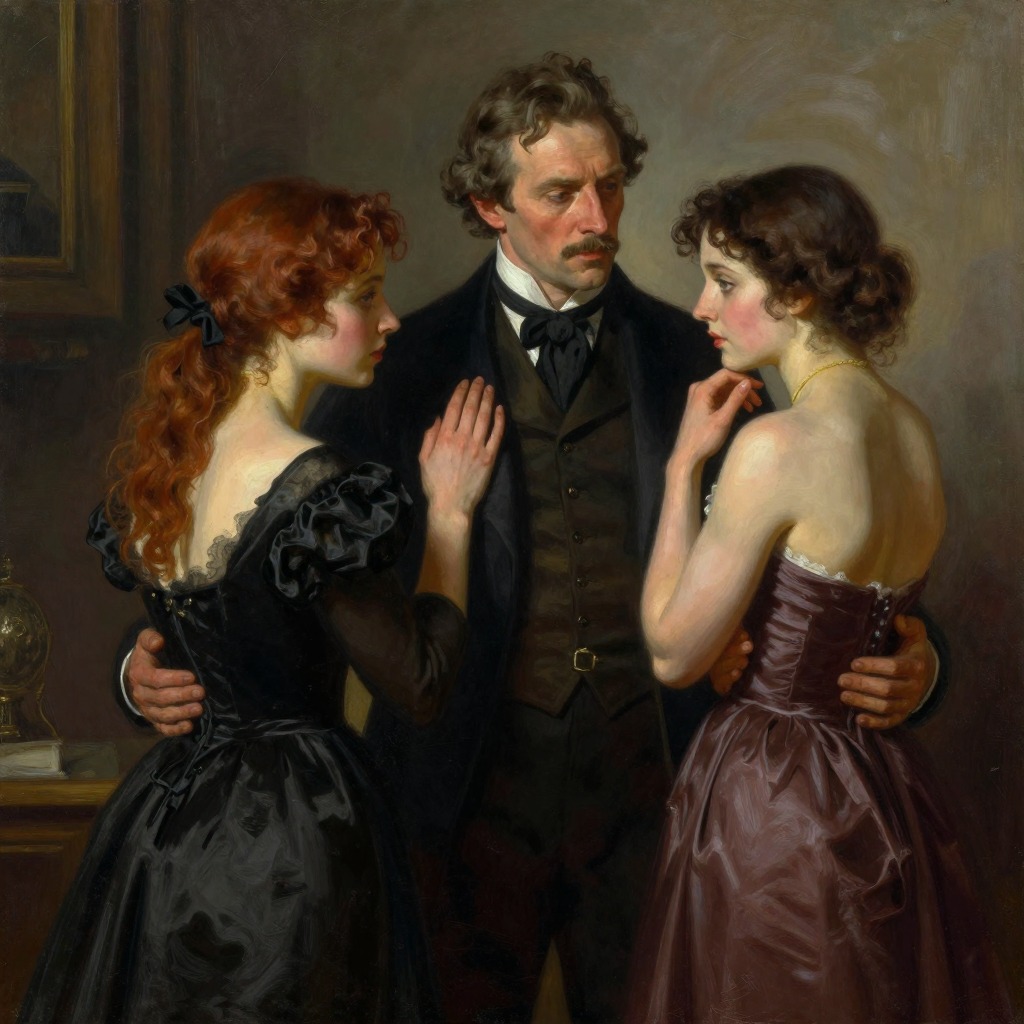
Despite his many conquests, Clamence is incapable of genuine love. He admits, "I loved them, according to the hallowed expression, which amounts to saying that I never loved any of them." His relationships are driven by sensuality and a "passion for gambling" rather than affection. He describes his sensuality as a "congenital inability to see in love anything but the physical." This inability to connect leads to a pattern of manipulation and cruelty. When a woman failed to meet his expectations, he did not simply move on; he "did everything necessary to charm her and really take her back" only to then "mortify her in every way," treating her like a prisoner. This dynamic reveals that his need is not for the woman herself but for the reassurance of his own dominance. Later, in a period of crisis, he felt a "secret suffering, a sort of privation" and thought he was in love, but he admits, "I acted the fool." He tried to force himself into a passionate relationship with a woman who spoke of love with the conviction of an intellectual, but when she became his mistress, he realized the reality did not match the stories. He concludes, "For more than thirty years I had been in love exclusively with myself. What hope was there of losing such a habit?"
Love, Judgment, and the Cry for Salvation
Clamence's distorted view of love is inextricably linked to his fear of judgment. He sees love as a potential escape from the laughter and condemnation he feels from the world. In his despair, he sought refuge among women, thinking, "She is his harbor, his haven." Yet even this refuge is poisoned by his need for control. He confesses that the only way he could live happily was if all the individuals he chose "must receive their life, sporadically, only at my bidding." This desire for total control is a defense against being judged. The ultimate failure of love is symbolized by the drowning woman on the Pont Royal. Clamence, who could have saved her, walked away. This moment of inaction is the core of his guilt, a failure of love that echoes throughout his life. Years later, on an ocean liner, seeing a black speck in the water, he realizes that the cry of the drowning woman "had never ceased" and had followed him across the world. This cry represents the judgment he cannot escape, a judgment that love—as he understands it—cannot absolve. His final, desperate hope is that his listener, a fellow lawyer, might be a policeman who will arrest him, offering a definitive judgment and a form of salvation. He imagines his own decapitation, saying, "I would be saved." In the end, love for Clamence is not a path to redemption but another arena for his performance of self, a failed attempt to silence the laughter and avoid the judgment he knows he deserves.